

Check out our latest products
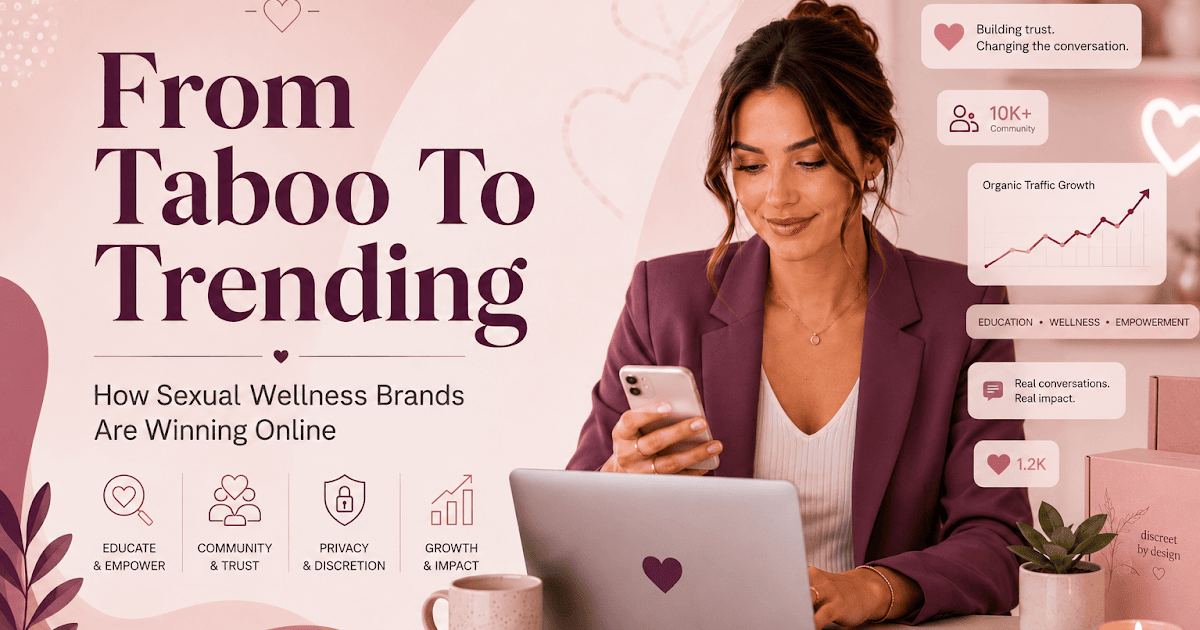
AnswerSexual wellness is no longer a whispered topic. It has become part of the larger wellness conversation, reshaping how women think about self-care, confidence, intimacy, relationships, and overall well-being.SummaryFor brands operating in this space, marketing comes with a unique set of challenges. From social media restrictions to payment processor roadblocks, getting the word out requires a smarter, more strategic approach. Here is what is changing, what is working, and what it means for women and the brands serving them.Expert NotesAs a beauty editor and content marketing strategist, I see sexual wellness as part of the larger self-care conversation. It connects to confidence, body awareness, relationships, and how women feel in their own skin.I also see how different the marketing side can be. Private topics do not always create loud public engagement. Someone may not comment, like, or share, but they may still read, click, save, sign up, or come back later to buy. Not every conversion comes with a public announcement, and honestly, thank goodness.For me, the brands that win in this space are the ones that educate first, protect privacy, and build trust before asking for a sale. Because when a topic is personal, the marketing cannot feel like a carnival barker with a coupon code.Why Is Sexual Wellness Becoming Part Of The Wellness Conversation?Not long ago, sexual wellness products were tucked behind pharmacy counters or buried in the back of a catalog. Today, they are featured in wellness roundups, discussed more openly by health professionals, and stocked on the shelves of mainstream retailers.
The cultural shift is real. Women are increasingly viewing sexual wellness as an extension of their overall health, no different from a quality skincare routine, a regular spa visit, or other forms of self-care.
And this shift is not only happening with women. Men are also paying more attention to confidence, body image, intimate wellness, and below-the-belt aesthetic treatments once considered too taboo to discuss publicly. I covered this same shift in my article on penis filler vs. penis Botox, where the bigger picture is not shock value. It is about how men are starting to view appearance, confidence, and self-care more openly.
This is not a niche conversation anymore. It is a wellness conversation. And no, wellness does not stop at green juice, yoga pants, and a face mask.Why Is This Industry So Hard To Market?Here is where things get complicated.Despite the cultural momentum, brands in the sexual wellness space face marketing restrictions that most industries never have to think about.Major social media platforms routinely flag or remove content related to adult products, even when it is framed around health, education, or wellness. Paid advertising is often limited on platforms like Instagram and Facebook. Even email marketing can trigger spam filters when certain terms are used.Payment processors add another layer of complexity. Many standard processors classify adult products as high risk, making it harder and more expensive for brands to accept online payments. Because apparently, selling a moisturizer is fine, but selling something tied to intimacy can make the internet clutch its pearls.For entrepreneurs exploring this space, the operational side has its own learning curve too. Brands that want to sell adult toys online
have to consider everything from the right e-commerce platform and
age-verification tools to adult-friendly payment solutions, privacy
policies, and discreet customer experiences.That is not something a standard online store tutorial is always going to cover.What Type Of Marketing Actually Works For Sexual Wellness Brands?Because paid social is largely limited, the brands winning in this space have gotten creative and strategic. Here is what is actually moving the needle:SEO And Educational ContentOrganic search is one of the strongest channels available to sexual wellness brands. In fact, a recent BrightEdge study found that organic search drives 53% of all website traffic across industries, underscoring its importance. Creating honest, educational content around topics like sexual health, product safety, intimacy, and wellness benefits can drive traffic without depending on restricted ad platforms. It also builds the kind of trust that converts browsers into buyers.In other words, if you cannot rely on ads, your content better know how to do more than sit there looking pretty.Blog Posts As A Long-Term Visibility ToolBlog posts are not just filler content or something to toss on a website when you remember you have one. For wellness, beauty, spa, personal care, and intimacy brands, blog content can answer real customer questions, support SEO, build authority, and give search engines and AI more context about what the brand actually does.That is why blog posts are one of the smartest ways to build long-term online visibility.Customer Loyalty Through TrustIn private wellness categories, customer loyalty is not built by shouting louder. It is built by making people feel understood, respected, and comfortable coming back. That means clear messaging, helpful content, consistent follow-up, and a brand experience that does not make the customer feel like they are being sold to every five seconds.For wellness, beauty, and personal care brands, customer loyalty starts with trust, education, and a better client experience.Sex-Positive Influencer PartnershipsThis is where many brands get influencer marketing wrong. They treat it like instant sales, when it is really a branding channel. It is similar to running an ad in the right place. Not everyone will buy the second they see it, but the brand becomes familiar, trusted, and part of the conversation.
For sexual wellness brands, that trust matters even more. People may see a creator they already follow talk about intimacy, confidence, relationships, or self-care, and that can make the brand feel safer and more approachable. The sale may not happen that day, but the seed has been planted.
That is also why tracking matters. People may not jump into the comments saying, “I need that for my anniversary,” or “Adding this to the honeymoon list.” So discount codes, custom links, affiliate tracking, or campaign landing pages can help measure interest when engagement happens quietly.
The best partnerships come from influencers who understand the topic, respect the audience, and can make the brand feel credible without turning it into a hard sell. A million views are nice, but if nobody trusts the recommendation, that is just internet confetti.Discretion As A Brand ValuePlain packaging and discreet billing are not just logistics decisions. They are brand trust signals. Customers who feel safe and respected are more likely to come back. For a category where privacy still matters to many buyers, discretion is a competitive advantage.Because no one wants their mailbox, bank statement, or retargeting ads doing a press release about their personal life.Community And Education Over PromotionThe brands building the most loyal followings are not the ones pushing products the hardest. They are the ones reducing stigma, answering real questions, and making their audience feel seen.That community-first approach is what drives long-term growth when traditional advertising is limited. Helpful beats pushy, especially when the topic is personal.How Should Brands Measure Success In This Space?Sexual wellness brands cannot judge success only by likes, comments, or follower counts. Most people are not jumping into the comments section to announce their private shopping habits, and honestly, who can blame them?In private wellness categories, people may be interested without engaging publicly on your social media posts. They may save a post, click a link, read an article, sign up for emails, return later, or make a purchase quietly.That means brands need to look beyond vanity metrics and pay attention to actions that show real intent, such as website clicks, organic traffic, blog performance, email signups, product page views, returning visitors, add-to-cart activity, and completed purchases. In other words, brands need to understand how to measure success of social media based on real business outcomes, not just surface-level engagement.These so-called quiet actions can be effectively tracked using analytics tools such as Google Analytics or e-commerce dashboards, which allow brands to monitor user behavior, engagement patterns, and conversion pathways even when customers do not engage publicly.In this category, quiet actions can be among the strongest signs that marketing is working.What Does This Mean For Brands Ready To Grow?Sexual wellness is one of the most dynamic and underserved categories in online marketing right now. The brands that figure out how to reach their audience authentically, strategically, and within platform constraints have a significant opportunity ahead of them.But it takes the right strategy. Restricted-category marketing is not something you figure out by applying a standard playbook. It requires content expertise, SEO depth, privacy-conscious messaging, and a real understanding of how to build visibility when the usual channels are limited.If you are building a brand in sexual wellness, intimacy, beauty, personal care, or any other category that plays by different rules, that is exactly the kind of challenge I help solve. From content strategy to SEO to social media, let’s talk about what growth actually looks like for your brand.Learn more about my marketing services.